Amazon's New Insurance Rule Starts November 2
From November 2, eleven product categories need $1 million of liability cover no matter how little you sell. The $10,000-a-month exemption stops protecting you.
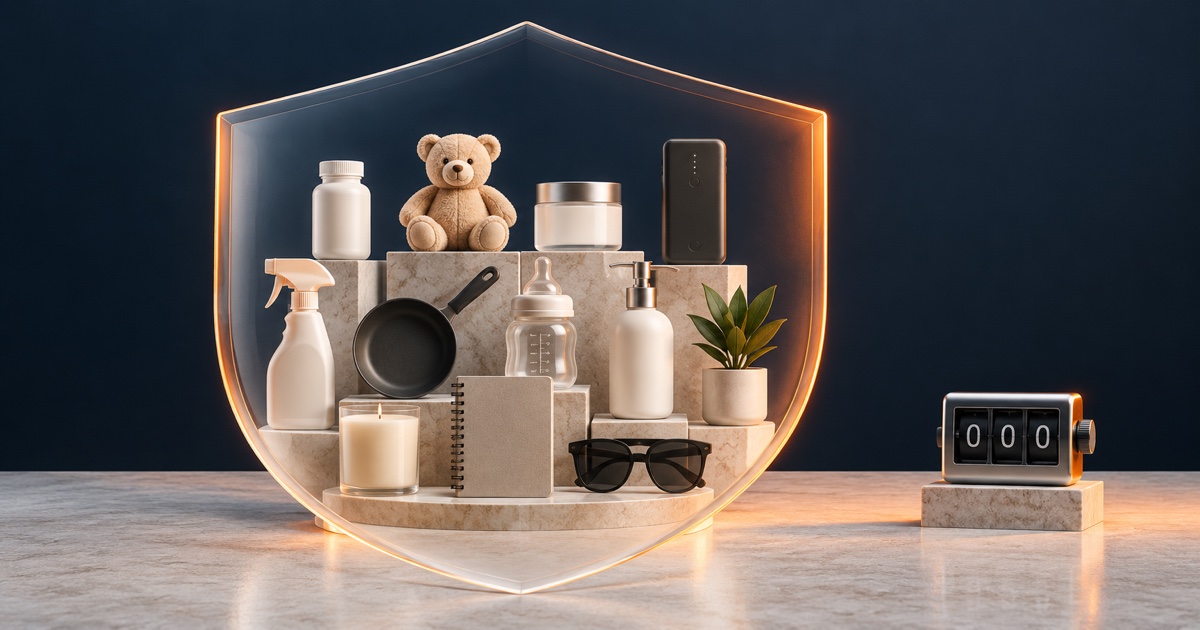
Most sellers file commercial liability insurance under "things to sort out when we're bigger". Amazon's requirement has always had a revenue trigger attached to it: pass $10,000 in gross proceeds in any single month and you have 30 days to produce a policy with at least $1 million per occurrence and in aggregate. Below that line, nothing happened.
On November 2, 2026, that stops being true for a specific and fairly large group of sellers.
What actually changes
Two things.
First, if you have listings in a category that carries Amazon's enhanced safety listing requirements, you must hold the $1 million policy covering those products regardless of how much you sell. Not $10,000 a month. Not any amount. The revenue threshold simply stops applying to you.
Second, sellers whose business is based in Mainland China must obtain their policy through Amazon's own Insurance Accelerator program. After November 2, newly submitted policies from other insurers get rejected. A valid third-party policy submitted before November 2 stays good until it expires, and then has to be replaced through the program.
That second rule is about where your business entity is registered, not where your product is manufactured. A US or UK company sourcing from China is unaffected by it. This gets misreported constantly and it is worth being clear about, because acting on the wrong version wastes money.
Everything else stays as it was. The $10,000 monthly trigger still exists for everyone outside those categories. The coverage minimum is unchanged.
The eleven categories
Amazon's enhanced-safety list currently covers:
- Children's products (car seats, toys, infant sleep products, play yards, bed rails)
- Consumable and ingestible products (supplements, over-the-counter medication, eye drops, cosmetics)
- Fire-related products (extinguishers, alarms)
- General household devices (small kitchen appliances: air fryers, toasters, coffee makers)
- Home medical devices (mobility equipment, respiratory supplies, walkers)
- Lithium battery products (e-bikes, scooters, batteries, power supplies)
- Outdoor power and heating equipment (electric tools, heaters, generators, pressure washers)
- Personal safety equipment (harnesses, helmets)
- Sleep products (mattresses, bed rails)
- Transport products (tires)
- Water and marine safety (life jackets, pool alarms)
Read that list again with your catalogue open rather than your brand in mind. "General household devices" quietly means a lot of kitchen electricals. "Consumable and ingestible" includes cosmetics, which surprises people who think of themselves as a beauty brand rather than an ingestibles one. Anything with a rechargeable cell in it lands in lithium batteries, and that catches products nobody thinks of as battery products.
Amazon has also said the list is not complete and will grow. Treat it as a floor.
The deadline that matters isn't November 2
This is the part that catches people, and almost nothing written about this rule says it clearly.
November 2 is when the policy takes effect. It is not your deadline. Amazon emails the sellers it has decided need new or updated cover, and you get 45 days from that email to submit proof. Miss it and your listings in the enhanced-safety categories get deactivated until you produce a compliant policy.
Two consequences follow from that.
Your actual deadline is personal and unknown until it arrives. You cannot plan around November 2, because your clock might start on November 3 or in February. What you can do is make sure the email reaches a human. If your Seller Central notification address is a founder's old inbox or a shared account nobody reads, this is the compliance event that will teach you so, and it will teach you during Q4.
And the deactivation is scoped. Amazon deactivates the listings in those categories, not your whole account. That is better than the worst case, but if the enhanced-safety categories are where your revenue lives, the distinction is academic. Forty-five days from an email arriving in mid-November puts your deadline around New Year, on the far side of your best trading weeks.
Why policies get rejected
Buying insurance and satisfying Amazon are two different tasks. The policy has to meet conditions that a standard general liability quote will not automatically include:
- The insured name must match your seller account's legal entity exactly. This is the most common rejection, and it hits sellers who restructured, changed trading name, or registered the Amazon account under a slightly different entity than the one their broker knows about.
- Amazon.com Services LLC and its affiliates must be named as an additional insured.
- The deductible cannot exceed $10,000.
- The insurer needs a financial rating of S&P A- or AM Best A- or better, with global claim-handling capability.
- Coverage must span every product you list, with no gaps and no sunset clause that voids claims made after the policy expires.
None of this is exotic, but each item is a reason a certificate comes back rejected, and each rejection burns days off a 45-day clock you did not choose the start date of.
What to do this month
- Check your catalogue against the eleven categories. Not your brand positioning, your actual ASINs. One qualifying product pulls you into the requirement.
- Confirm who receives Seller Central notifications, and that somebody reads that inbox daily through Q4.
- Get quotes now rather than on receipt of the email. Brokers are slower in November and December, and you want the entity-name and additional-insured details settled while there is no clock running.
- If you already have a policy, check it against the five conditions above before assuming it will be accepted. An existing policy is not automatically a compliant one.
- If your business is registered in Mainland China, plan for the Insurance Accelerator and check when your current policy expires.
The honest summary
For most sellers this is a non-event: you are outside the categories, or you already carry the cover because you crossed $10,000 a month years ago. For a smaller seller in supplements, kids' products, cosmetics or anything with a lithium cell, it is a real change, because the thing that protected you was your size, and size no longer protects you.
The awkwardness is the timing. A rule that lands on November 2 with a 45-day response window sits directly on top of the quarter you cannot afford to lose listings in. The sellers who get hurt by this mostly will not be the ones who refused to buy insurance. They will be the ones who did not see the email.
That pattern is the reason we build what we build. Seller Sphere watches your account and your catalogue and tells you when something changes, so a notification that decides your Q4 doesn't sit unread in an inbox nobody owns.
Frequently asked questions
What is changing for Amazon seller insurance on November 2, 2026? Two things. Sellers with listings in categories carrying enhanced safety listing requirements must hold commercial liability insurance of at least $1 million per occurrence and in aggregate, regardless of sales volume. And sellers whose business is based in Mainland China must obtain their policy through the Amazon Insurance Accelerator, as newly submitted third-party policies will be rejected after that date.
Do I need insurance if I sell less than $10,000 a month? Outside the enhanced-safety categories, no. The existing rule still applies: the requirement is triggered by exceeding $10,000 in gross proceeds in any month, after which you have 30 days to comply. Inside those eleven categories, from November 2 the revenue threshold no longer applies and cover is required at any sales level.
Which categories are affected? Children's products, consumable and ingestible products including cosmetics and supplements, fire-related products, general household devices such as small kitchen appliances, home medical devices, lithium battery products, outdoor power and heating equipment, personal safety equipment, sleep products, transport products such as tires, and water and marine safety products. Amazon has said the list will expand.
How long do I have to comply? Amazon emails affected sellers and allows 45 days from that email to submit proof of insurance. The 45 days run from the notification, not from November 2, so your deadline depends on when Amazon contacts you.
What happens if I miss the deadline? Your listings in the enhanced-safety categories can be deactivated until you provide a compliant policy. The deactivation is scoped to those listings rather than the entire selling account.
Does the Amazon Insurance Accelerator rule apply if I manufacture in China? No. The requirement is based on where your business is located, not where your products are made. Sellers based outside Mainland China can continue to use any insurer whose policy meets Amazon's requirements.
Why would Amazon reject a policy I already have? Common reasons are an insured name that does not exactly match the seller account's legal entity, failure to name Amazon.com Services LLC and its affiliates as an additional insured, a deductible above $10,000, an insurer below an S&P A- or AM Best A- rating, or coverage that does not extend to every product listed.